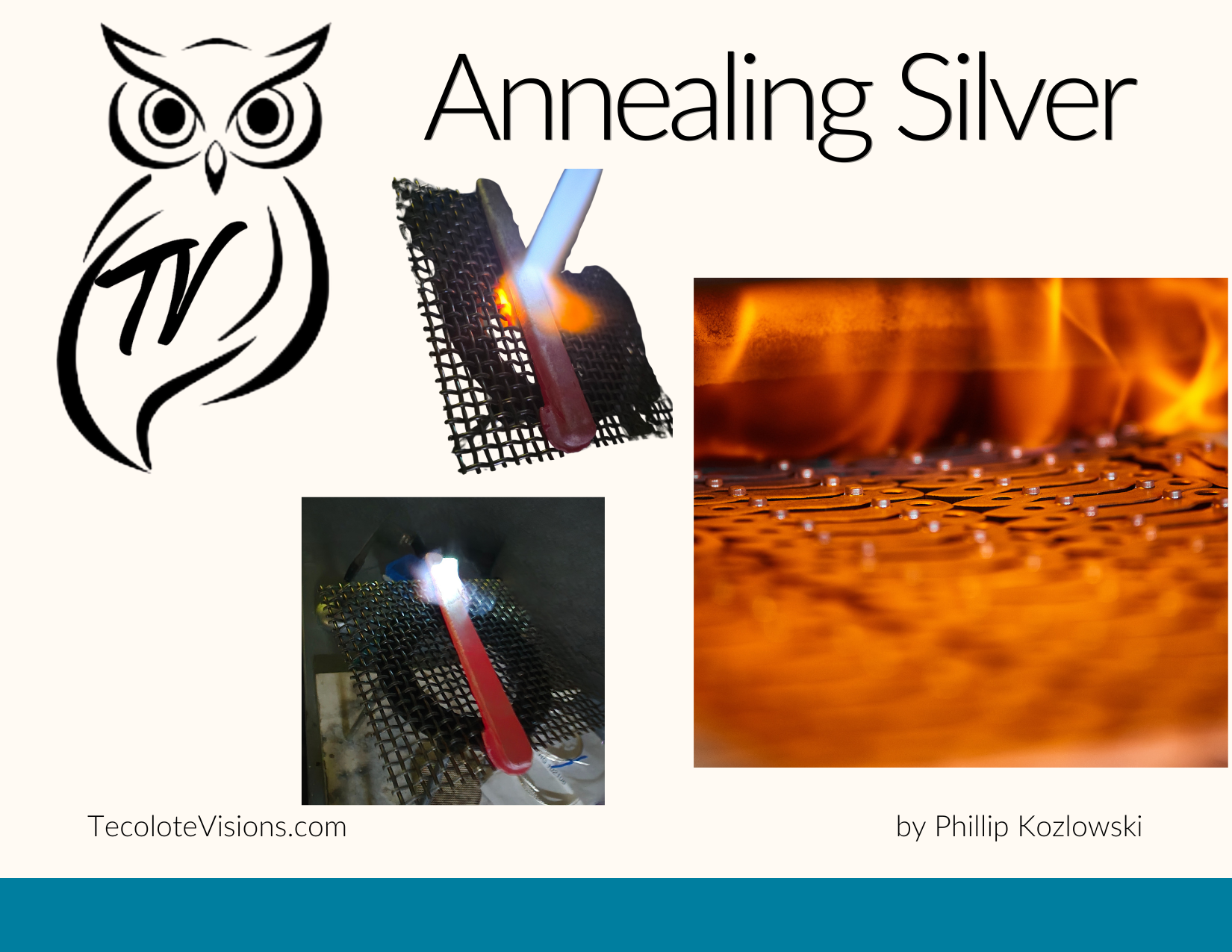
When you hold a handcrafted silver piece, you’re not just admiring metal—you’re experiencing the result of fire, precision, and artistry. One of the key techniques that transforms raw silver into wearable art is annealing silver, a process that softens and strengthens the metal so it can be shaped into stunning jewelry. At Tecolote Visions, artisan silversmith Phillip Kozlowski uses annealing to bring out the best in every sterling silver and turquoise design, ensuring durability while maintaining beauty.
In this guide, we’ll explore what annealing silver is, why it matters, how it’s done, and why this centuries-old technique remains essential in modern jewelry making.
What Is Annealing Silver?
Annealing is the process of heating silver to a specific temperature to relieve internal stress and restore its malleability. As silver is worked—hammered, rolled, bent, or stamped—it becomes “work-hardened,” meaning the crystal structure inside the metal gets strained. Without annealing, silver can become brittle and crack under further shaping.
By applying heat in a controlled way, the silver’s structure realigns and softens. This allows jewelers like Phillip to continue working on the piece without damaging it, creating intricate designs while ensuring long-lasting strength.
Why Annealing Is Essential in Jewelry Making:
- Prevents Cracking: Work-hardened silver can snap under stress without proper softening.
- Enables Fine Detailing: Softer silver can be engraved, formed, and shaped with precision.
- Improves Durability: Even though annealed silver is soft, it can be work-hardened again during finishing, creating a perfect balance of flexibility and strength.
The Science Behind Annealing Silver
When silver is heated to around 1100–1200°F (593–649°C), the heat causes the crystalline structure inside the metal to rearrange itself. This reorganization eliminates internal stress points created during hammering or bending. Once cooled, the silver is more workable, ready to take on new shapes and details.
For sterling silver (92.5% silver and 7.5% copper), annealing also helps blend the two metals into a more uniform structure, which is essential for consistent strength and appearance.
How to Anneal Silver: Step by Step
Phillip Kozlowski anneals silver in his Tecolote Visions studio as part of the silversmithing process for rings, bracelets, pendants, and custom turquoise jewelry. While the method may vary depending on the piece, the general process follows these steps:
1. Preparing the Silver
The silver is cleaned of oils, dirt, and oxides that could interfere with heating. Phillip often uses a mild pickling solution or a simple cleaning method to ensure a smooth surface.
2. Heating the Metal
Using a jeweler’s torch, Phillip gradually heats the silver to the proper temperature. The key is to heat evenly, allowing the entire piece to reach annealing temperature without overheating, which could melt the metal.
Visual cue: Silver doesn’t change color drastically when annealed, but it will show a dull red glow in low light when it’s ready.
3. Quenching or Air Cooling
Once the correct temperature is reached, the silver is quenched (cooled quickly in water) or allowed to air-cool, depending on the type of silver and the next steps in the process.
4. Cleaning (Pickling)
Annealing leaves a thin layer of oxidation on the silver, especially sterling. Phillip places the piece in a pickling solution to remove the oxide layer, revealing the clean metal underneath.
5. Continuing the Work
With the silver softened, Phillip can continue shaping, texturing, or soldering the piece. The processes of work-hardening and annealing may repeat multiple times to achieve the final design.
Annealing vs. Work Hardening: Finding the Balance
One of the fascinating aspects of silversmithing is the balance between softness and strength. Jewelry must be malleable enough to shape but strong enough to endure daily wear.
- Annealing silver restores softness for shaping.
- Work hardening (through hammering, bending, or tumbling) strengthens the piece once the final shape is achieved.
Phillip expertly combines these techniques to create jewelry that’s both artful and durable. His turquoise-set silver cuffs, for example, may go through several annealing cycles before reaching their finished form.
Annealing Silver vs. Gold and Copper
While annealing is used on many metals, silver behaves differently from gold or copper.
- Silver: Requires careful heating because it doesn’t show color change until it’s near its melting point.
- Gold: easier to anneal because it displays more color cues as it heats.
- Copper: Work-hardens quickly, requiring frequent annealing.
Phillip’s experience with sterling and fine silver gives him an intuitive understanding of the delicate balance needed for perfect results.
Phillip Kozlowski’s Approach at Tecolote Visions
For Phillip, annealing isn’t just a technical step—it’s part of the artistry. His handcrafted jewelry often involves multiple techniques: forming, soldering, stone setting, and texturing. Annealing allows him to create pieces with organic curves, intricate bezels for turquoise cabochons, and strong yet elegant bracelet designs.
Whether he’s crafting a custom sterling silver pendant or a statement turquoise ring, annealing ensures the final piece has both beauty and longevity.
Explore Phillip’s handcrafted silver and turquoise jewelry to see annealed silver transformed into wearable art.
Caring for Annealed Silver Jewelry
Once a piece is complete, annealed silver jewelry doesn’t require special care compared to other silver pieces, but maintaining its luster is essential:
- Store properly: keep pieces in anti-tarnish cloth or bags.
- Clean gently: Use a silver polishing cloth to maintain shine.
- Avoid harsh chemicals: perfume, chlorine, and household cleaners can tarnish silver.
With proper care, annealed silver jewelry can last for generations, keeping both its beauty and its story.
Why Handmade Annealed Silver Jewelry Matters
Mass-produced jewelry often skips traditional techniques like annealing, opting for machine processes that prioritize speed over craftsmanship. Phillip’s work stands apart because he honors these age-old methods, ensuring each piece is truly one-of-a-kind.
When you purchase a handmade silver and turquoise cuff, ring, or pendant from Tecolote Visions, you’re not just buying jewelry—you’re investing in artistry, tradition, and a piece designed to last a lifetime.
Commission a custom silver and turquoise piece and experience the difference annealed silver makes.
Final Thoughts
Annealing silver is both a science and an art. It transforms hard, unyielding metal into something pliable, ready to become a work of wearable art. At Tecolote Visions, Phillip Kozlowski uses this technique to craft jewelry that reflects both nature’s beauty and human creativity. When you wear a piece of annealed silver jewelry from Tecolote Visions, you’re carrying the story of fire, transformation, and artistry. Each piece is a testament to the timeless relationship between metal and maker, ensuring your jewelry is not just an accessory, but a legacy.